

Some key insights from the article:
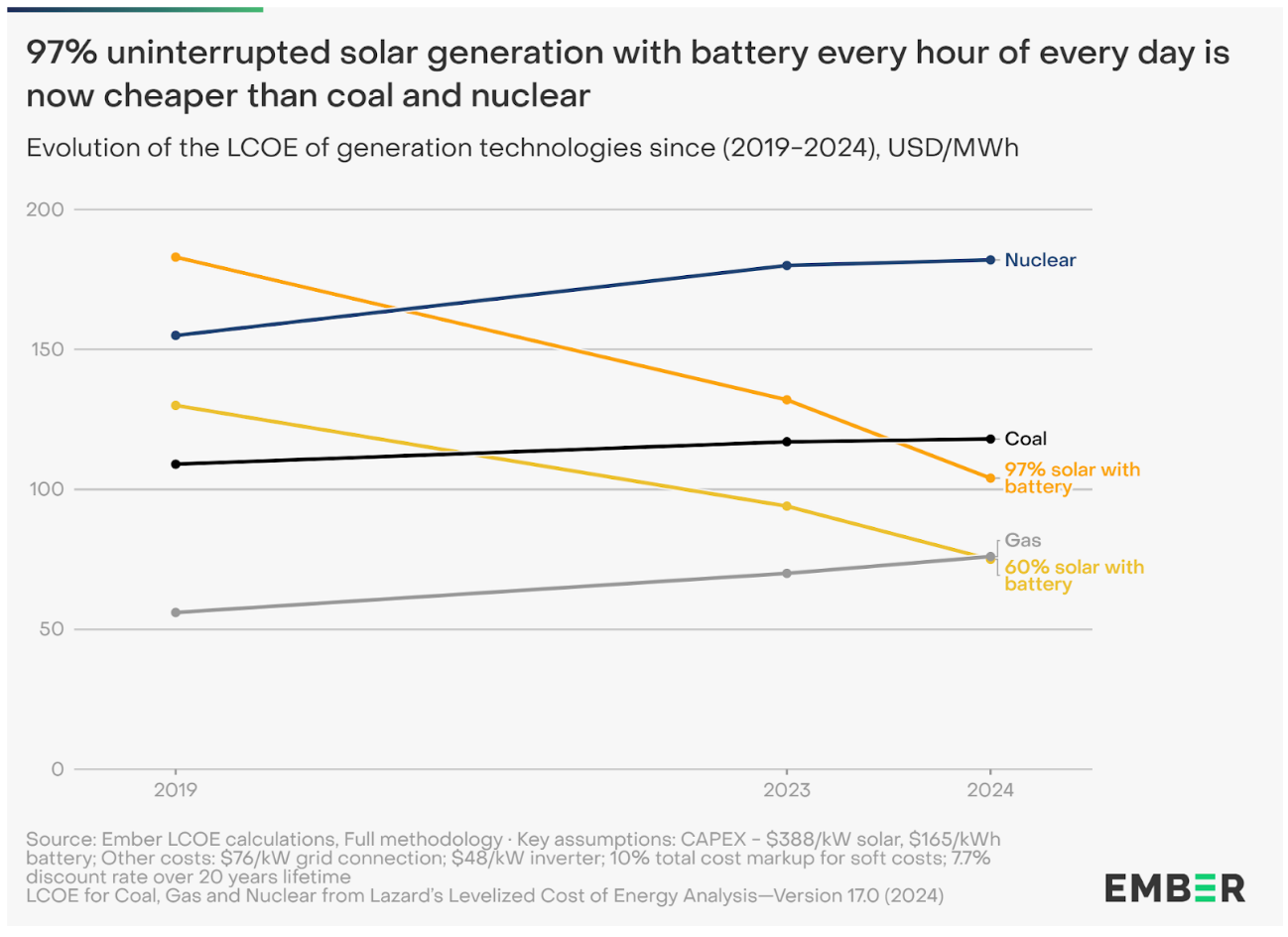
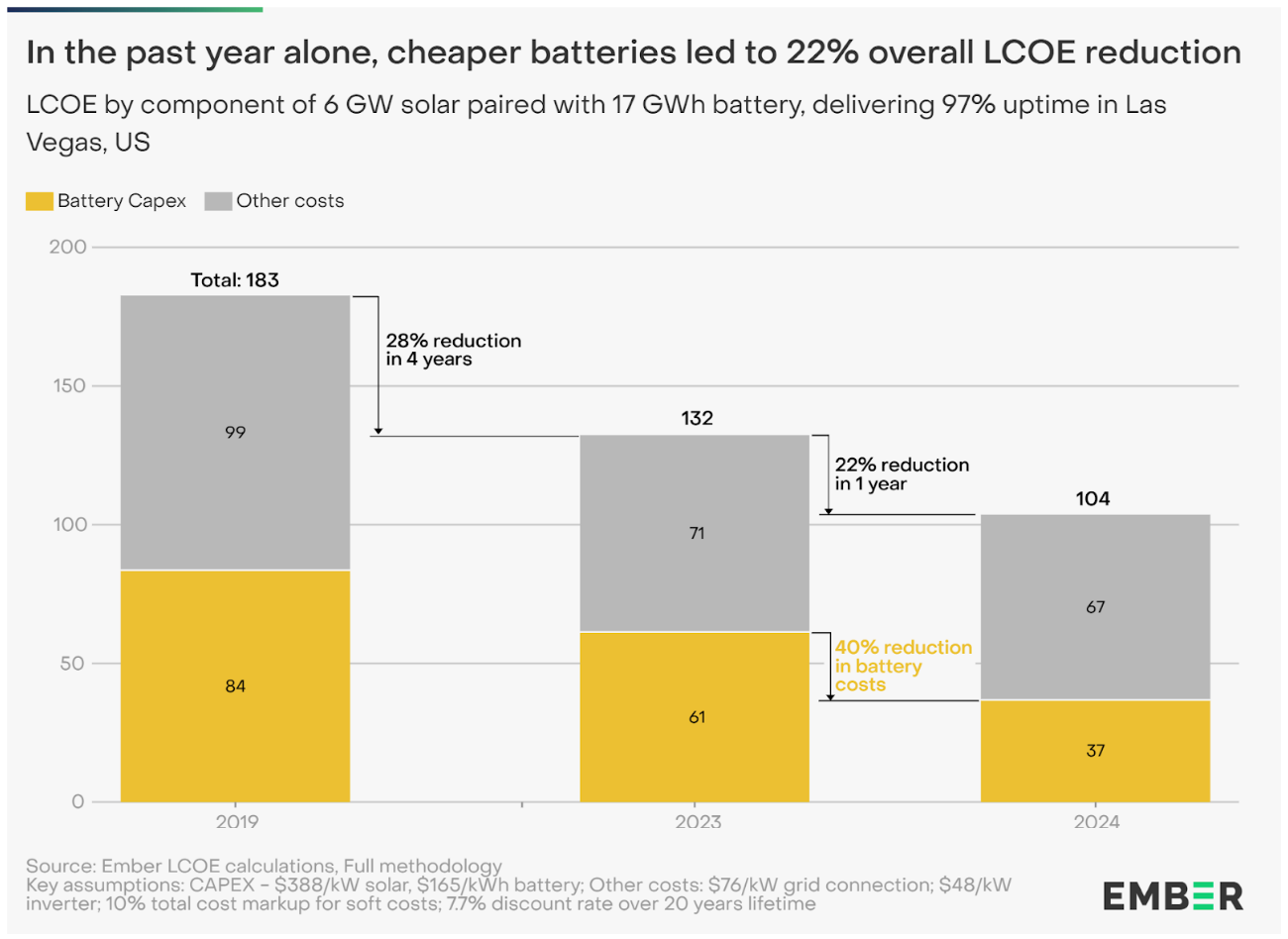
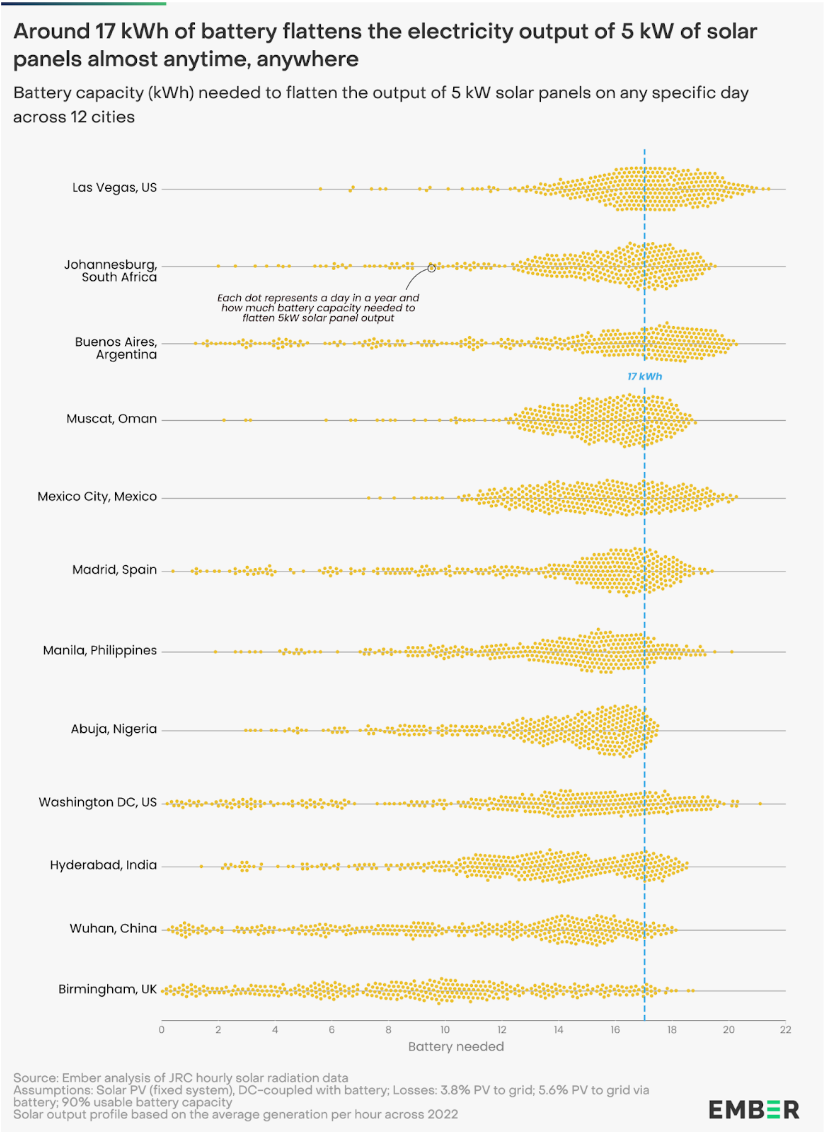
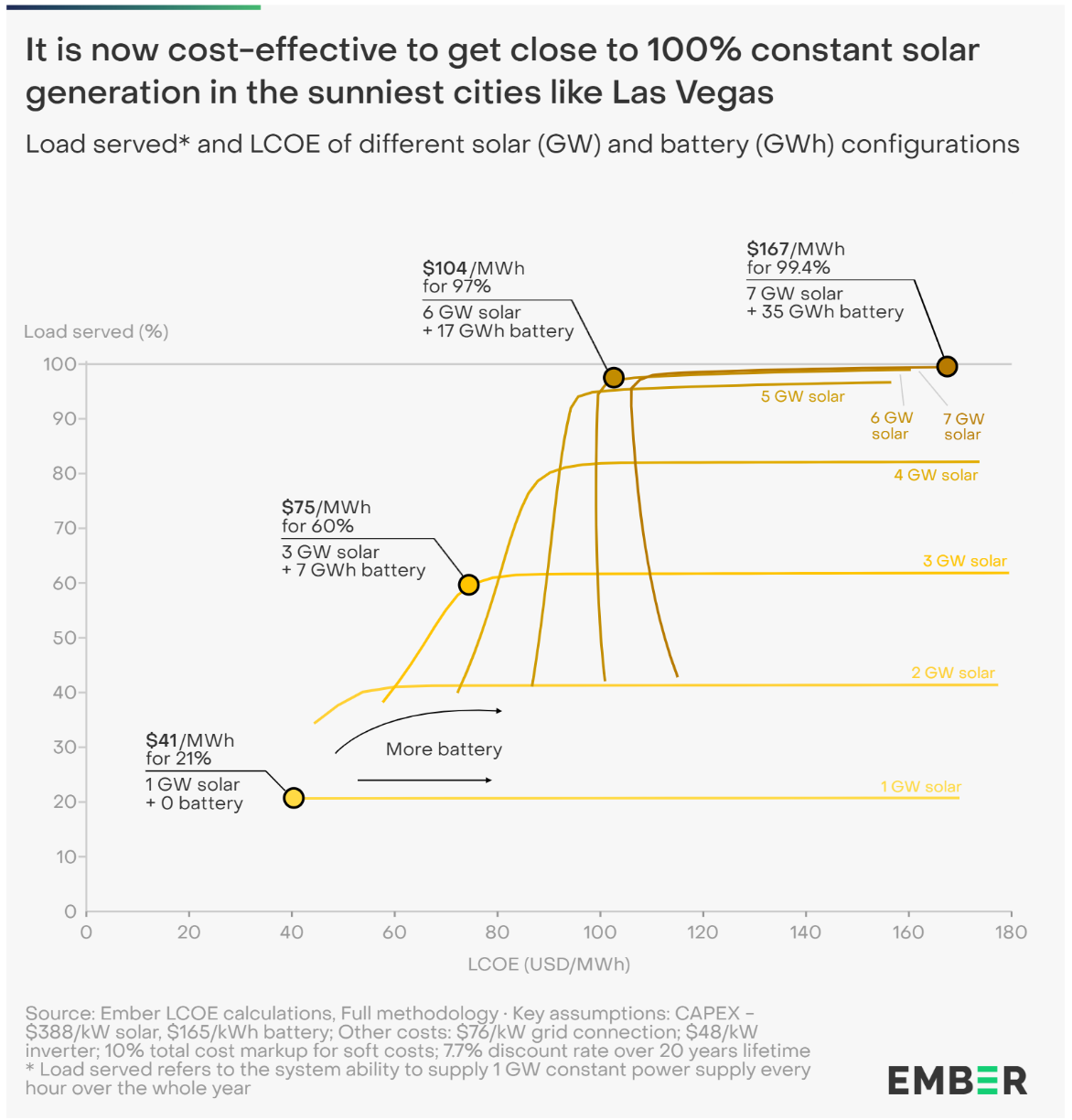
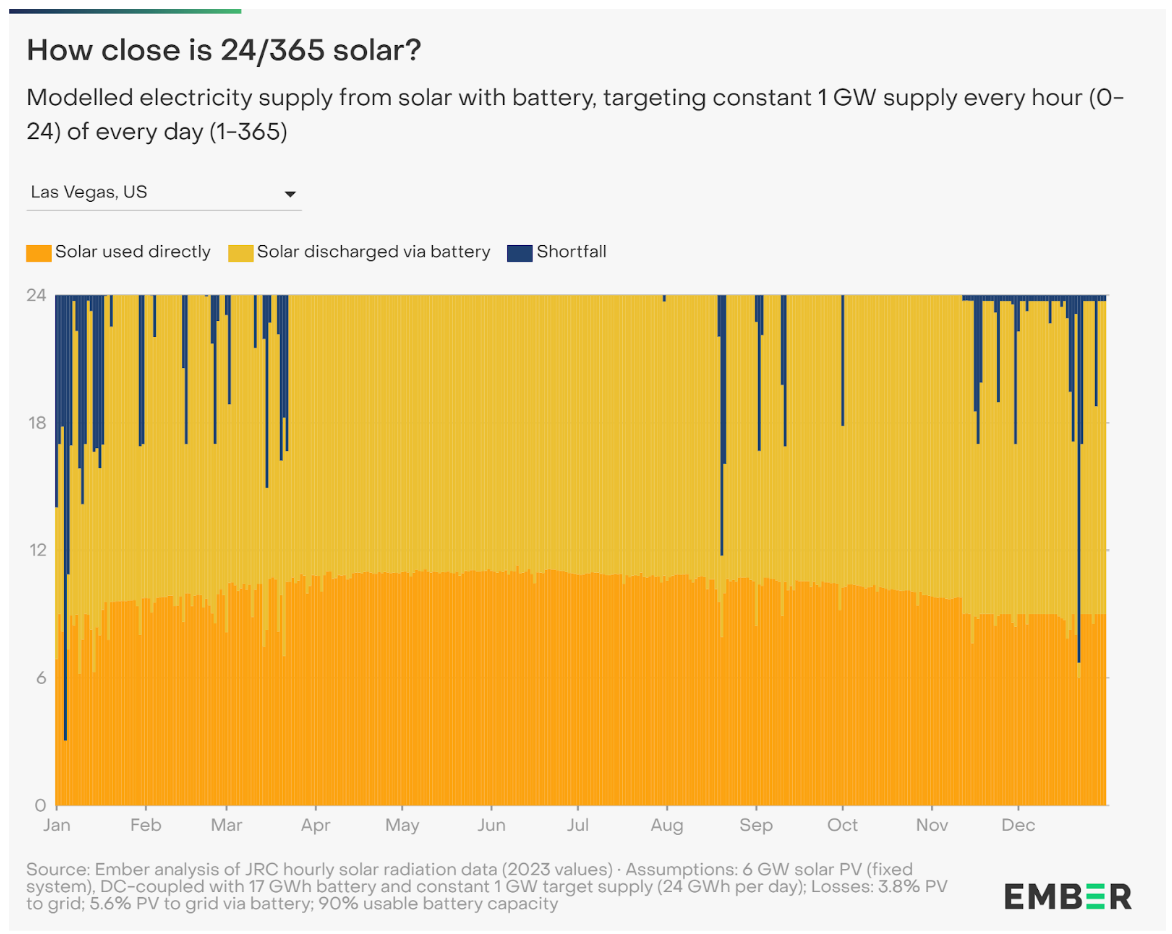
Basically, what they did was to look at how much batteries would be needed in a given area to provide constant power supply at least 97% of the time, and the calculate the costs of that solar+battery setup compared to coal and nuclear.
The diagram shows that they fall short on winter mornings
My own modelling to decide what size battery I want for my house says it’s easy almost every day, but when you have three rainy and overcast days in a row you need a battery far larger or an alternative. For me the alternative is the grid; at grid scale it’s gas generators
If somebody has to keep that gas generator serviced only to run it on winter mornings, that electricity is going to be very pricey.
Indeed, but cheaper than enough batteries to cover those times
In the off grid home scale one I’d size and set the generator to run for several hours in a row to fully charge the battery on days when the battery was at a sufficiently low charge entering the night, at least that’s what my current modelling suggests. Diesel gensets work best when running fully loaded for at least long enough to warm up
I guess at grid scale you find the sweet spot where most years the gas power station and batteries are balanced to provide cheapest power averaged over the year