
- 11 Posts
- 846 Comments


 3·12 days ago
Oversized if objective
Gargantuan if genuine
Baker announces he has created bread
 1·13 days ago
I think that is a different situation in your city. I don’t know which city it is, and I don’t claim to know much about how the Italian economy works, but housing prices seem similar to what I’ve got in my city (Portland, Oregon, USA), except that wages are drastically lower. So my guess is that it’s a problem with people being underpaid as Italy is a developed economy, similar to the US.
€24,000 a year would be about €12 an hour which is below minimum wage in my city. A minimum-wage worker would be paid about $34,000 annually, or €29,500. The mean hourly wage in my city works out to about $76,000 annually (€66,000). I prefer the median as a better estimate of what ordinary people make, but the census bureau only reports the mean as far as I could find.
To make my point clearer because you missed it: Councils should NOT be paying for these regardless of whether anything relating to corporate bailouts happens, because detached single-family houses are a poor use of resources and an inefficient and wasteful form of housing.
I don’t agree that the reason single-family detached homes with lawns are necessarily unaffordable primarily because of greed. That might be one factor, but I think the main factor as to why they’re unaffordable is simple geometry. Councils don’t want to pay for miles of roads, pipes, and electrical cables just to serve less than a hundred families, so these costs get imposed on the developers and homeowners. Some states, including mine, will require new single-family developments to have an HOA, which is responsible for paying for the upkeep of some of these resources. That directly results in higher assessments for ratepayers. Or, where the council absorbs the costs, they still get passed on to owners and renters through higher property taxes.
So while I’m sympathetic to your arguments, I feel that blaming only greed is a shallow understanding of why nobody can afford a house.
I think that the US as a country needs to abandon the idea that every family should have a detached house with four bedrooms, two cars, and a lush green front garden surrounded by a picket fence. It’s just not sustainable. That made sense in 1960, but the country’s population has doubled since then.
On the other hand, I would like to see it possible for every family to be able to at least afford a basic 2-bedroom condominium with all the amenities that modern life has to offer, including walkable spaces, accessible green areas, and reliable public transportation.
11,000 hours of minimum wage labour in my city would be $185,000. Maybe a bit too low to be entirely realistic, but $200,000 is probably within reach with a bit of elbow grease on the government side.
Well, male lions do have a reputation for being the laziest mfs in the animal kingdom
 9·23 days ago
I wrote this comment on a $150 phone which for all the purposes that I use it for, performs exactly as well as an $800 iPhone.
He said that because he thought his involvement in politics had cost him money. It damaged Tesla’s brand image and hurt its sales. He thought that this could cause his wealth to decrease. That Tesla’s share price would go down. That the markets would punish him for his folly.
It did not.
He has instead found himself richly rewarded for it.
“growing questions” this, “demands proof of life” that, all of that is meaningless. Either declare him dead and issue the writs of election or he shows his face in public.
You’re going to have to be more specific about what you mean by people using the data of a dead person to commit fraud. Upon death, a person’s identity documents, identity numbers, and other legal identifiers will deactivate and can no longer be used.
Social media accounts of the dead person can be tagged with a flag that notifies viewers that the subject is deceased.
Deleting a dead person’s information so that their social media profile’s contents can’t be copied to a new account masquerading as them does nothing, because them being dead is immaterial to fraudsters being able to copy their profile’s contents.

 158·1 month ago
There’s nothing inherently wrong with the concept of ANPRs (automatic number plate recognition) as these are called in the rest of the world. It’s more of an issue that there is a complete lack of laws surrounding how that data is to be used, and especially when it’s controlled by a private company. If there were strict laws limiting the situations where ANPRs could be used, such as requiring a warrant to begin searching for plate numbers and automatically discarding data from non-matching plates, I doubt people would complain as much about these.
 2·1 month ago
So far, in the cases which have actually run to completion in the ICC, they have been about crimes committed in countries with weak or non-functional judiciaries. This, I would assume, is the court’s primary purpose.
Your assertion that the ICC Prosecutor is obligated to respect the decision of a state party’s procuratorial authority to not prosecute seems unsupported by the text of the Rome Statute. Article 20, Section 3 of the Statute only precludes the ICC from trying offences which have been fairly and impartially tried in another court. The key here, is that the accused must have actually been tried. A decision not to prosecute by local prosecutors does not prevent the ICC Prosecutor’s Office from pressing charges.
I do, however, agree for the most part that the United States can avoid the issue with respect to its own citizens by simply prosecuting all the possible crimes domestically in American courts, which would remove the jurisdiction of the ICC, averting all the nasty due process violation concerns. The US can accede with a reservation that all crimes involving US citizens will instead first be referred to the US Department of Justice for local prosecution, and then domestic legislation can force the Department of Justice to at least put some effort into a prosecution to satisfy the requirements of Article 20, Section 3 and foreclose ICC jurisdiction.
There are also some arguments about how the US being obligated to arrest visiting foreign heads of state or government with active warrants against them would be detrimental to the general peace-building process, but I don’t agree with this interpretation. Article 98 of the Rome Statute states that state parties are not required to extradite in violation of other obligations of international law, presumably including diplomatic immunity.
So yes, I agree that it is a weak argument for not adopting the Rome Statute. To be clear, I think the real reason the US did not ratify the Rome Statute is because the US military has its fingers in so many pies that it’s inevitable that some criminal conduct has occurred somewhere, but having even a single US service member appear before an international war crimes tribunal would be geopolitically embarrassing, especially since neither of the two other contemporary world powers subject themselves to ICC jurisdiction.
I will be honest, the genuine reservations voiced about the ICC and the due process problems are legitimate. I don’t agree that they outweigh the benefits of joining the ICC, but I do understand that a reasonable person could conclude otherwise.
For one, ICC proceedings take years and there is no right to a fast trial. Article 67 of the Rome Statute gives the defendant a right against “undue delay” but this clause is essentially toilet paper in reality. A defendant can spend years in detention awaiting a resolution to their case, even if they are later acquitted and released (which has happened).
For comparison only, there is a right to a speedy trial in American law. If exercised, this usually results in a trial scheduled in mere weeks, at most a month or two for complex cases.
If the ICC is known for anything, it’s the completely broken pre-trial process.
After the next presidential election, the US should accede to Rome Statue and dump this loser on the steps of the ICC. Might as well nab Bibi as well, Maduro-style.
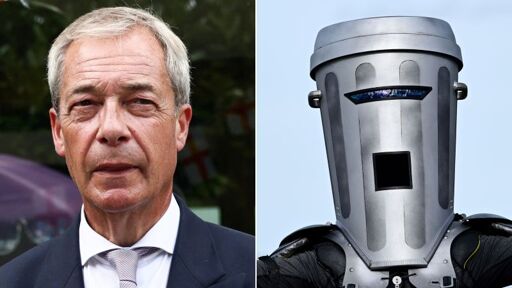





Voters are dumb, welcome to democracy. But this should mean it will not be hard to win over their votes.