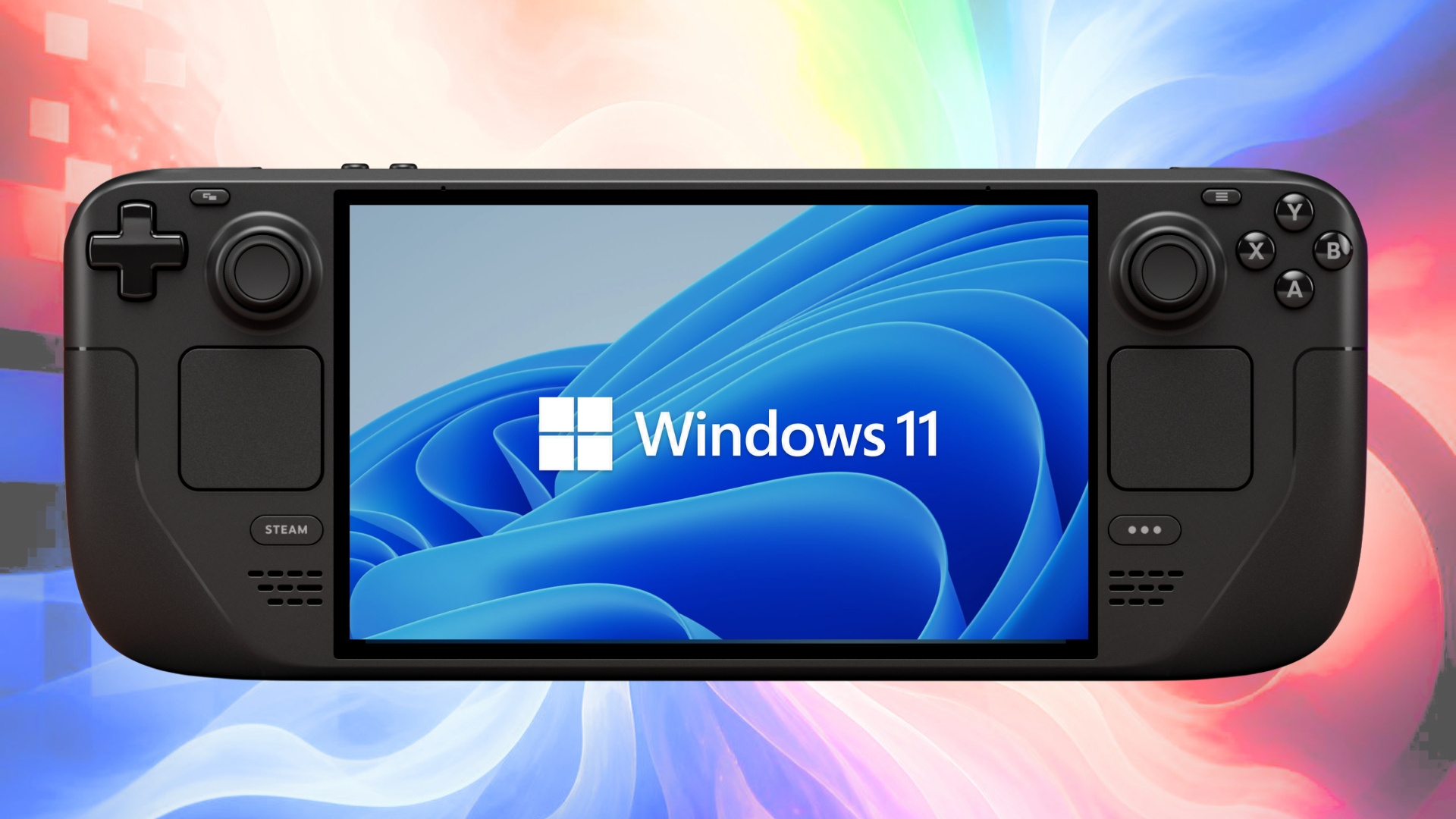
But because many anti-cheat apps still aren’t compatible with Linux (hence, SteamOS), installing Windows on Steam hardware is currently the only way that gamers can enjoy titles that require them.
So it looks like Valve is at least giving tools for running Windows on their hardware for those that really really want that kernel level malware, I mean anti-cheat, to play a certain game.
I was talking to a couple of people about my positive experience faming on Linux since I switched recently, and one of them seemed really interested since he hates Windows.
The other guy mentioned “But some games still don’t work. Certain multiplayer games have kernel-level anti-cheat that doesn’t work on linux.” and I saw the first guy visibly lose interest even though I would have bet money he was going to actually try linux before. So I asked him “Do you play competitive multiplayer games?” “No, not really.”
The fact that linux can’t run every game is apparently a turn-off for some people, even if they aren’t games they want to play.
The thing is that people don’t want to get that new game that that seems so fun to find out that it doesn’t actually work. Other games not working is seen as a sign of potential future trouble.
Yeah, it’s not unreasonable, I had to bail on Forza Horizon 6 at launch, due to severe issues at launch, and the recent DOOM DLC has some visual bugs too (there’s a PR in Mesa already!).
It’s amazing it works this well, and the maintainers of these tools are incredible for getting fixes out so quickly when a new game launches with issues, but there are some unavoidable realities to not being the target platform.
I think the advantages are worth it, and completely deleted my Windows install earlier this year to fully commit, but it’s naive to say that the experience is flawless and you won’t ever have problems gaming. I can definitely be sympathetic to more casual players being put off by that.
That’s a bad analogy because 99% of the games that people play on steam machines will be Windows games, not Linux games. It’s an issue when you don’t know if a steam game will work on a steam machines, or any other PC game won’t work on your pc.
I mean, it’s pretty easy to know. They have an icon directly next to the game that says what it works on.
You have just as much knowledge about if it’ll work as you do based on hardware requirements. Which is to say “none, unless you look at the place where they tell you”.
Not sure where you’re getting that. It’s in excess of 25% that work specifically on the steamdeck, which is the easiest metric to see.
In any case, if the person is saying it’s an issue because you don’t know when buying a game, then it seems pretty relevant that you can know by simply “looking where you buy the game”. If you Google it, you can find out with an even greater chance of discovering the answer is “yes”.
I don’t usually like competitive games, but there is one now that i actively want to play (just came out with a pve mode) and the devs/publishers have specifically disabled Linux support in the kernel level malware.
You do realize that Linux is intended to be run on ECC memory, while Windows has been built with many features to compensate and is therefore more resilient for almost all home users. Your anecdotes are funny because they lack all technical merit (typical Linux propaganda).
Even Linus Torvalds would shake his head at the nonsense LiGNUts put out there.
Just fyi, you are talking to a nutter. That person created the linuxsucks community and seems to spend all waking (probably sleeping too) hours thinking about linux and how to get mad at linux. Don Quixote has nothing on this guy
Data integrity is a hardware problem, not an OS problem.
The myth that Linux is stable enough that you don’t need ECC unless you’re running ZFS or a database is wrong. A flipped bit corrupts memory before the OS sees it.
-ECC protects the OS. The OS cannot protect itself.
Windows has the most aggressive consumer‑grade fault‑tolerance stack with WHEA, bad‑page retirement, PCIe AER recovery, GPU/driver subsystem restart, VBS integrity enforcement, core offlining, and memory poisoning.
-These features dramatically reduce crashes on unreliable hardware.
ECC is the only one to detect single‑bit errors, correct single‑bit errors, detect multi‑bit errors, and prevent silent corruption from propagating. It’s not ‘Linux stability’ - it’s literally ECC (which most consumer desktops and laptops don’t have)!
-Servers need ECC because server workloads demand correctness (and Linux doesn’t even try to deliver that because they don’t have to).
Cosmic rays, electrical noise, and manufacturing defects literally hit hardware, not software. -That famous blue screen in front of an audience during a Windows presentation? -Nothing to be ashamed about (but they could’ve used ECC)!
If the hardware lies, the OS has no way to know. Even Windows Server requires ECC. Enterprise Linux distros recommend ECC. It’s about physics: not the OS.
Are you a shitty bot or just a shitty troll? Every webservice you use is based on free/open software, without it you would be getting all the speed an reliability of Windows ME from your doom scrolling.
Are you a dumb dumb or an idiot? Web serving is one of the simplest jobs a computer can have. -Why wouldn’t they choose the cheapest option? Wow… gonna block you because arguing with an idiot is a waste of time.
Show me a AAA FOSS game. Even the FOSS games that come close had their engines donated. Professional production software like Adobe, Office, CAD - The industry runs on proprietary. Blender is probably the best thing you have, and it was practically donated too.
A big part of PCs is flexibility. I can run Fedora, Sally can run Mint, and Fred can run Windows. Contrast that with an Apple where you are stuck running Mac or some of the more proprietary software oriented vendors where the only way to use half your RGB and even display features is to run in Windows.
Personally? I run Linux. I am happy. But I also remember when we were happy that Google was focusing on “the open source” project “Android”. And… we see how that went down. And with how many people think SteamOS is something unique and magical? I am happy now but I am definitely thinking about what 2030 will be (… if there is a 2030 but that is a different fear).
a lot of manufacturers are realizing that the OS is not profitable, just merely a vehicle to shove their products
the difference between Android and SteamOS is that SteamOS is funding FOSS devs who were already a part of the linux ecosystem and are contributing back to it
in contrast android built a walled garden while keeping the open source bits for theirselves
but yeah, its slightly possible that valve could become like google, but i heavily doubt it at the moment


Why support it? Their specialty is Linux.
Per the article:
So it looks like Valve is at least giving tools for running Windows on their hardware for those that really really want that kernel level malware, I mean anti-cheat, to play a certain game.
gold
Just think of using Windows as being a cuck who is fine with your kernel getting a train run on it, every day, every night, all the time.
You literally don’t even know by how many, who they specifically are.
But also, I’m sure its fine, no need for regular STD testing.
… not that it would even be possible.
I was talking to a couple of people about my positive experience faming on Linux since I switched recently, and one of them seemed really interested since he hates Windows.
The other guy mentioned “But some games still don’t work. Certain multiplayer games have kernel-level anti-cheat that doesn’t work on linux.” and I saw the first guy visibly lose interest even though I would have bet money he was going to actually try linux before. So I asked him “Do you play competitive multiplayer games?” “No, not really.”
The fact that linux can’t run every game is apparently a turn-off for some people, even if they aren’t games they want to play.
The thing is that people don’t want to get that new game that that seems so fun to find out that it doesn’t actually work. Other games not working is seen as a sign of potential future trouble.
Yeah, it’s not unreasonable, I had to bail on Forza Horizon 6 at launch, due to severe issues at launch, and the recent DOOM DLC has some visual bugs too (there’s a PR in Mesa already!).
It’s amazing it works this well, and the maintainers of these tools are incredible for getting fixes out so quickly when a new game launches with issues, but there are some unavoidable realities to not being the target platform.
I think the advantages are worth it, and completely deleted my Windows install earlier this year to fully commit, but it’s naive to say that the experience is flawless and you won’t ever have problems gaming. I can definitely be sympathetic to more casual players being put off by that.
deleted by creator
The same people will generally accept that a ps4 game won’t play on an xbox etc. So it is a bit odd.
That’s a bad analogy because 99% of the games that people play on steam machines will be Windows games, not Linux games. It’s an issue when you don’t know if a steam game will work on a steam machines, or any other PC game won’t work on your pc.
This is a genuine concern. Kernel level applications being required is not.
It is when the reason they don’t work on Linux is because it doesn’t support kernel level anti-cheat.
I mean, it’s pretty easy to know. They have an icon directly next to the game that says what it works on.
You have just as much knowledge about if it’ll work as you do based on hardware requirements. Which is to say “none, unless you look at the place where they tell you”.
By this metric, 99% of games don’t work on Linux. How is this helping?
Not sure where you’re getting that. It’s in excess of 25% that work specifically on the steamdeck, which is the easiest metric to see.
In any case, if the person is saying it’s an issue because you don’t know when buying a game, then it seems pretty relevant that you can know by simply “looking where you buy the game”. If you Google it, you can find out with an even greater chance of discovering the answer is “yes”.
Honestly, the kind of games that don’t run on Linux, I usually don’t want to play them anyway. Like League of Legends (shudders)
Exactly where I’m at. It’s not like we’re low on options.
Removed by mod
I don’t usually like competitive games, but there is one now that i actively want to play (just came out with a pve mode) and the devs/publishers have specifically disabled Linux support in the kernel level malware.
Ironically, this is the way to do that. If you want to be more secure you only use Windows for those particular games and nothing else.
That bullshit never stopped anyone from cheating. Why is this even a thing?
easy don’t play those games
If I had to give up everything that doesn’t work on Linux, I wouldn’t bother having a computer. FOSS is commie garbage.
Removed by mod
You do realize that Linux is intended to be run on ECC memory, while Windows has been built with many features to compensate and is therefore more resilient for almost all home users. Your anecdotes are funny because they lack all technical merit (typical Linux propaganda).
Even Linus Torvalds would shake his head at the nonsense LiGNUts put out there.
Removed by mod
Just fyi, you are talking to a nutter. That person created the linuxsucks community and seems to spend all waking (probably sleeping too) hours thinking about linux and how to get mad at linux. Don Quixote has nothing on this guy
Removed by mod
Data integrity is a hardware problem, not an OS problem.
The myth that Linux is stable enough that you don’t need ECC unless you’re running ZFS or a database is wrong. A flipped bit corrupts memory before the OS sees it.
-ECC protects the OS. The OS cannot protect itself.
Windows has the most aggressive consumer‑grade fault‑tolerance stack with WHEA, bad‑page retirement, PCIe AER recovery, GPU/driver subsystem restart, VBS integrity enforcement, core offlining, and memory poisoning.
-These features dramatically reduce crashes on unreliable hardware.
ECC is the only one to detect single‑bit errors, correct single‑bit errors, detect multi‑bit errors, and prevent silent corruption from propagating. It’s not ‘Linux stability’ - it’s literally ECC (which most consumer desktops and laptops don’t have)!
-Servers need ECC because server workloads demand correctness (and Linux doesn’t even try to deliver that because they don’t have to).
Cosmic rays, electrical noise, and manufacturing defects literally hit hardware, not software. -That famous blue screen in front of an audience during a Windows presentation? -Nothing to be ashamed about (but they could’ve used ECC)!
If the hardware lies, the OS has no way to know. Even Windows Server requires ECC. Enterprise Linux distros recommend ECC. It’s about physics: not the OS.
Random thought - do you use AI to author your comments/posts?
Removed by mod
Are you a shitty bot or just a shitty troll? Every webservice you use is based on free/open software, without it you would be getting all the speed an reliability of Windows ME from your doom scrolling.
Are you a dumb dumb or an idiot? Web serving is one of the simplest jobs a computer can have. -Why wouldn’t they choose the cheapest option? Wow… gonna block you because arguing with an idiot is a waste of time.
Removed by mod
Do you even try to make sense?
Show me a AAA FOSS game. Even the FOSS games that come close had their engines donated. Professional production software like Adobe, Office, CAD - The industry runs on proprietary. Blender is probably the best thing you have, and it was practically donated too.
Removed by mod
they are probably just providing the windows drivers that their vendors already have for the components inside the hardware they’re selling.
A big part of PCs is flexibility. I can run Fedora, Sally can run Mint, and Fred can run Windows. Contrast that with an Apple where you are stuck running Mac or some of the more proprietary software oriented vendors where the only way to use half your RGB and even display features is to run in Windows.
Personally? I run Linux. I am happy. But I also remember when we were happy that Google was focusing on “the open source” project “Android”. And… we see how that went down. And with how many people think SteamOS is something unique and magical? I am happy now but I am definitely thinking about what 2030 will be (… if there is a 2030 but that is a different fear).
a lot of manufacturers are realizing that the OS is not profitable, just merely a vehicle to shove their products
the difference between Android and SteamOS is that SteamOS is funding FOSS devs who were already a part of the linux ecosystem and are contributing back to it
in contrast android built a walled garden while keeping the open source bits for theirselves
but yeah, its slightly possible that valve could become like google, but i heavily doubt it at the moment